
“It smells fine in here.” “The dust isn’t that bad today.” “I’m used to the noise.”
For decades, many workplaces have relied on human senses and “common sense” to evaluate safety. A visual sweep of a factory floor might reveal a slip hazard or a missing machine guard. But what happens when the hazard is an odorless gas, a microscopic silica particle, or an ergonomic strain that builds up over ten years?
Human senses are incredibly unreliable risk assessors. Many hazardous substances have odor thresholds well above their lethal limits. By the time you can “smell” the danger or “feel” the health effect, the biological damage is already done.
From Guesswork to Scientific Precision
The modern industrial landscape requires more than general safety checklists; it demands the scientific rigor of Occupational Hygiene.
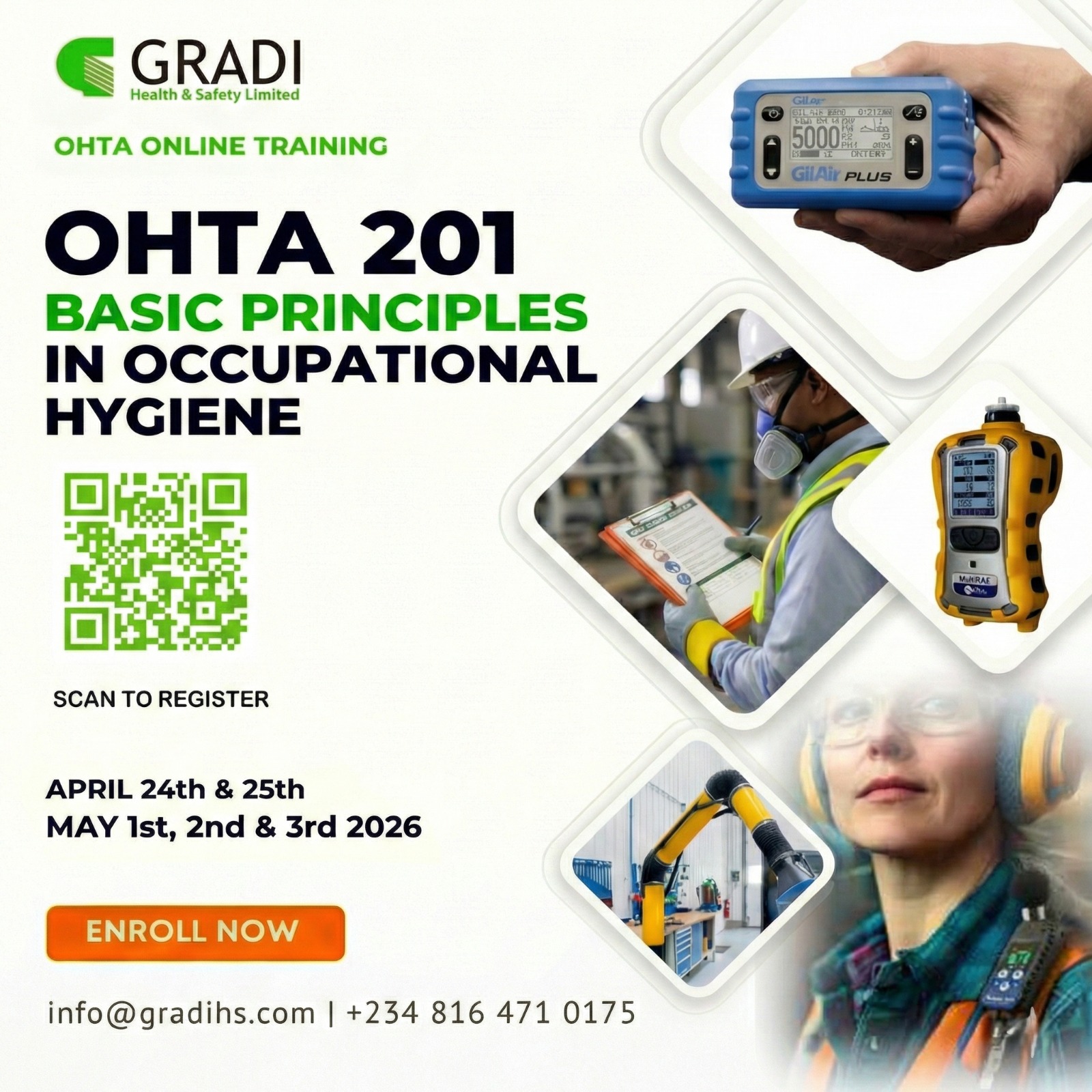
True worker protection is not based on guesswork; it is based on the AREC framework: Anticipating, Recognizing, Evaluating, and Controlling hazards using empirical data, advanced instrumentation (like air sampling pumps, dosimeters, and multi-gas monitors), and toxicological science.
However, there is a distinct competence gap in the industry. Many HSE managers, medical practitioners, and regulatory inspectors are trained heavily in acute safety management, but lack the foundational science to quantify and control chronic health exposures.
The Gateway to Technical Excellence: OHTA 201
If you want to transition from a generalist safety officer to a highly specialized technical expert, OHTA 201 (Basic Principles in Occupational Hygiene) is your blueprint.
This globally recognized course is the definitive starting point for professionals looking to master the science of workplace health. Rather than just handing out PPE and hoping for the best, OHTA 201 equips you with the knowledge to:
- Understand the physiological impact of chemical, physical, and biological agents.
- Learn the basics of measurement and how to quantify exposures using scientific instrumentation.
- Design and advocate for robust engineering controls (like Local Exhaust Ventilation) that eliminate the hazard at the source.
Upgrade Your Capability
The most sought-after HSE professionals today are those who bring scientific precision to the boardroom.
They don’t just say, “It’s dusty.” They say, “The Time-Weighted Average exposure is exceeding the Threshold Limit Value, and here is the engineering solution we need.”
Are you ready to elevate your career?
Join Gradi Health & Safety Limited for our upcoming interactive online cohort!
📅 Dates: April 24th & 25th | May 1st, 2nd & 3rd 2026 🔗 Register Here: Click here to secure your spot
Stop guessing. Start measuring. Protect health with science.